
UWR ATLAS INTERVIEWS #01
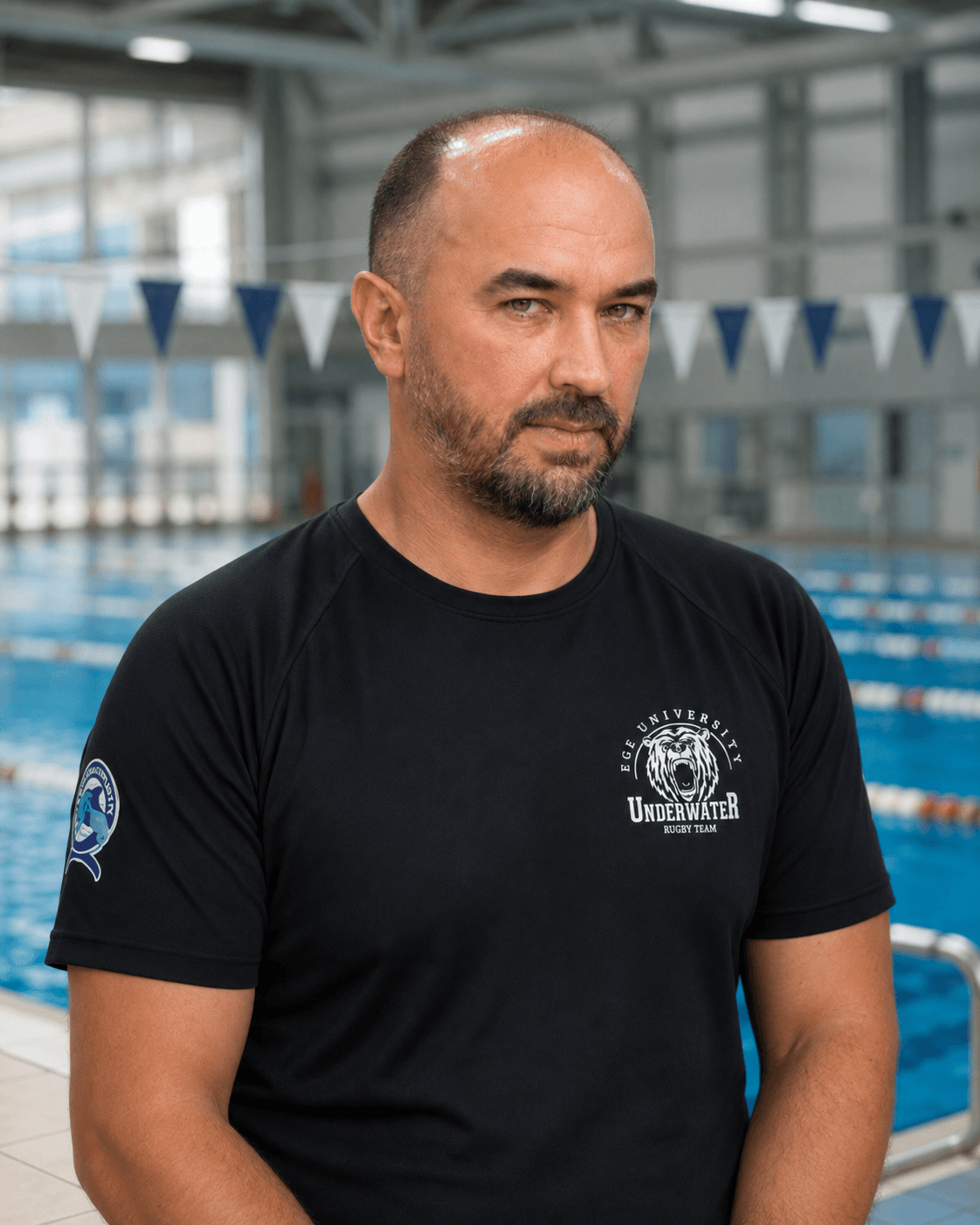
Köksal Özükor
A conversation on long-term coaching, team culture and the development path of young athletes in Ege University Underwater Rugby.
For the first UWR Atlas interview, we begin with a conversation that comes from inside the sport itself.
Yusuf Melih Özbebit, who has been playing with the Ege University Underwater Rugby team for around three years, sits down with Köksal Özükor, one of the coaches who first opened the door to Underwater Rugby for him.
A player’s first coach holds a particular place. The first training session, the first underwater contest, the early mistakes, the first correct movements and the team culture that takes shape over time are often formed within that relationship.
Köksal Özükor was not only Yusuf’s first Underwater Rugby coach; he remains one of his coaches at Ege University today.
That is why the first UWR Atlas interview is not only about how Underwater Rugby is played.
It is also about a player’s starting point, the experience a coach passes on over many years, and the UWR culture that continues from one generation to the next at Ege University.
Yusuf Melih Özbebit asks. Köksal Özükor answers.
THE CONVERSATION
QUESTIONS AND ANSWERS
How would you describe the development of Underwater Rugby in Türkiye?
Underwater Rugby has existed internationally since the 1960s. In Türkiye, its first steps came in the 1980s and 1990s as the wider underwater-sports structure developed. The major momentum arrived in the 2000s.
International results in youth categories, success at U21 and U18 level, and later the results of the elite national teams all raised the profile of the discipline. There was rapid growth between 2010 and 2020. The pandemic naturally created a pause, but the sport began moving again once championships resumed.
How do you assess Ege University’s place in that process?
From the very beginning of the Underwater Rugby structure within Ege University Sports Club, we have placed importance on the youth pathway. We tried to build our own system by developing athletes from the ground up.
The pandemic changed our plans, but even then we did not stop working for the future. We began to see the return on that work especially after 2022.
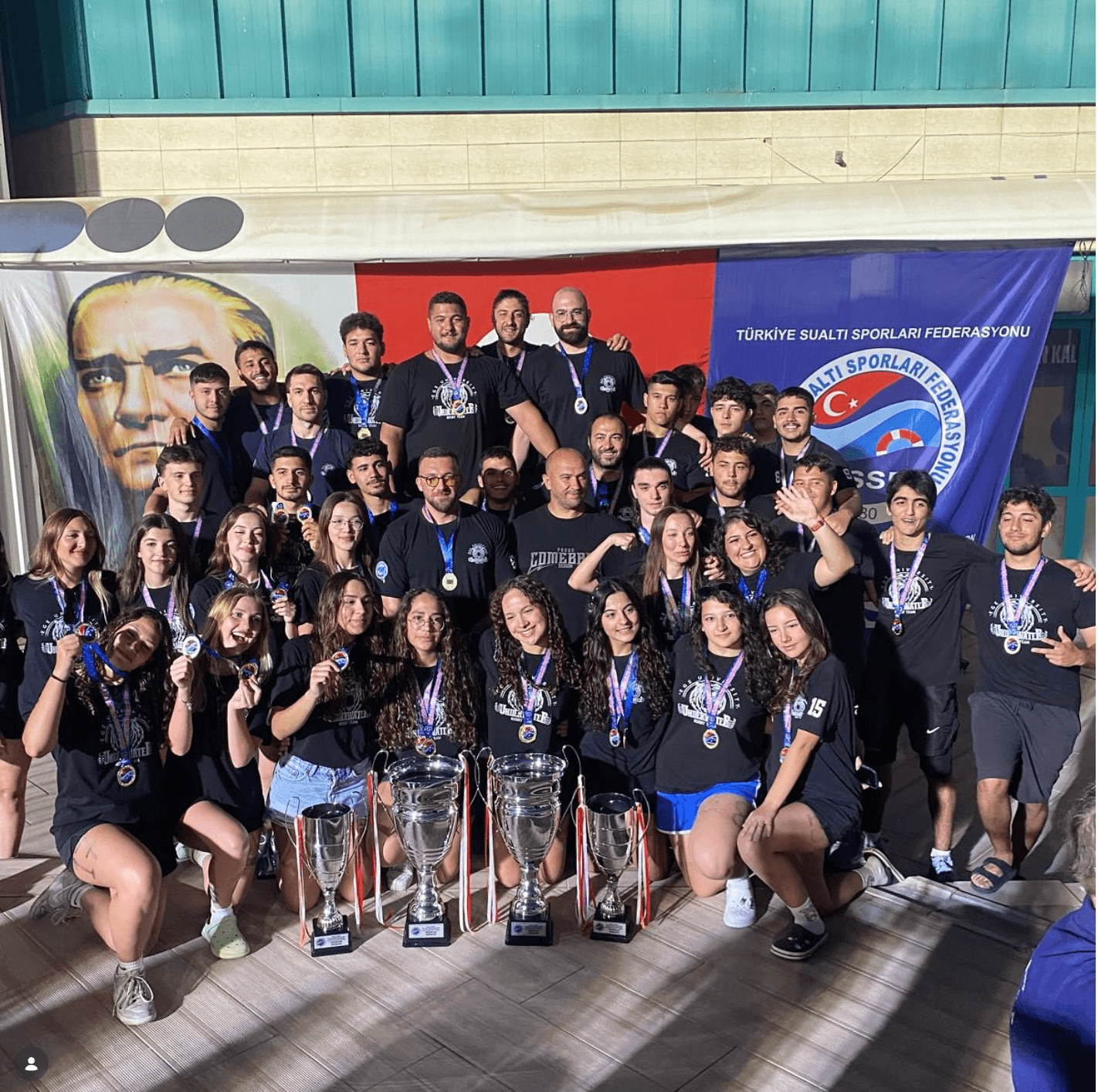
At the U21 Turkish Championship, our men’s team finished first and our women’s team second. After those results, many athletes from our club were selected for national-team squads. Then, at the European Championship in Athens, the men finished first and the women second. These are a great source of pride for us.
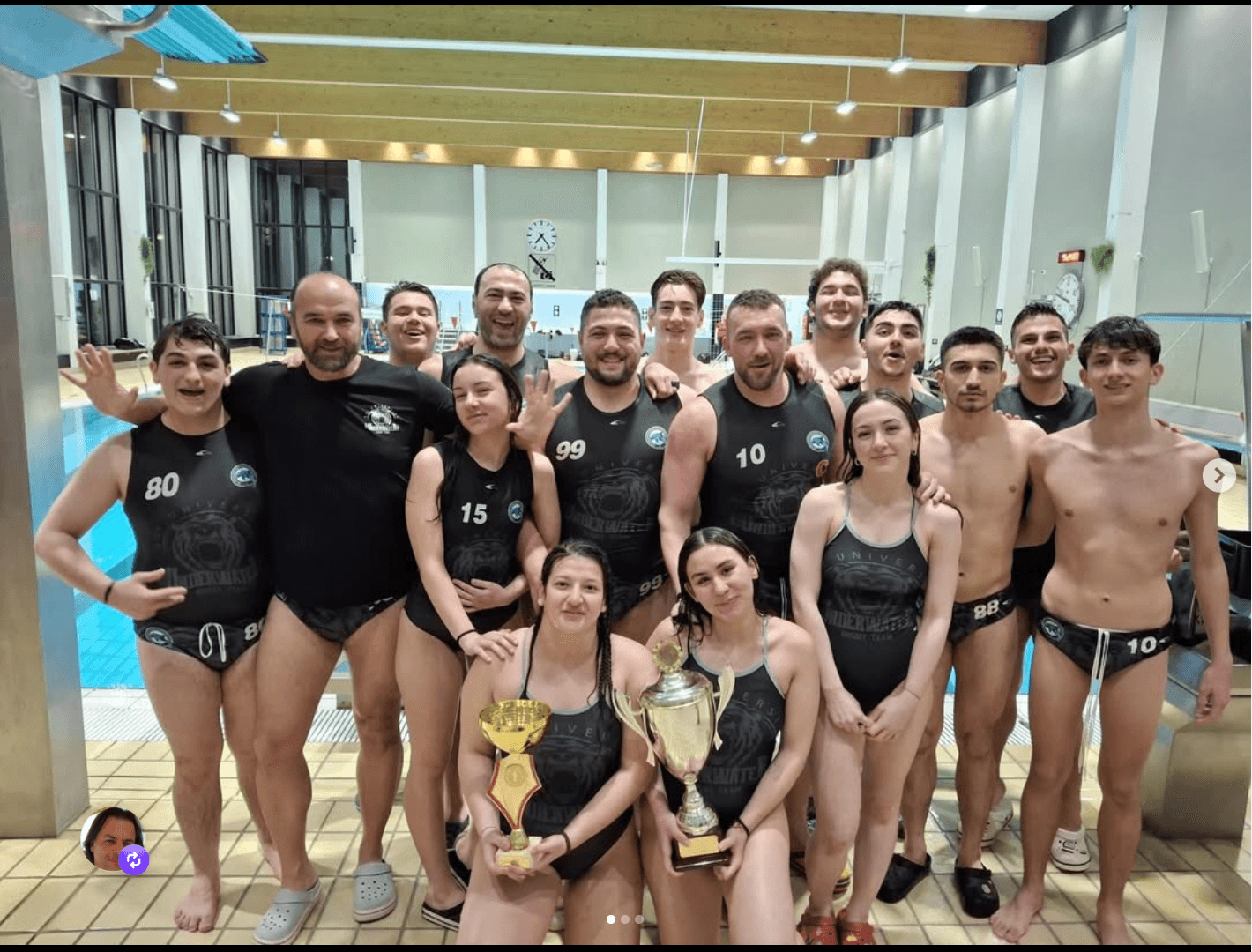
After a success, can you ever say as a coach, “We have made it”?
No. I believe the work must continue after success as if we had never become champions.
That is where the difference of being a major club emerges. The system continues when coaches, technical staff, employees and athletes are supported. A championship is not an endpoint; it is the beginning of the next target.
“After a success, we keep working as if we had never become champions.”
— Köksal Özükor
From the outside, Underwater Rugby can sometimes look like an easy and enjoyable game. How difficult is it in reality?
From the outside, you see athletes diving and resurfacing with ease, almost as if they are moving inside an aquarium. But there are many details within the game.
When someone has learned their craft well, they make something difficult look easy from the outside. The same is true in Underwater Rugby.
Underwater, there is a three-dimensional playing space unlike the land sports we are used to. A player can move not only forward and back or side to side, but in every direction through 360 degrees. Developing that awareness takes time.
How long does it take an athlete to develop that three-dimensional awareness?
It can take one or two years for that awareness to fully open up.
After a while, a player begins to perceive the space they occupy underwater very differently. It does not remain only within sport; the player’s way of looking at their surroundings and their spatial awareness also develop.
Underwater Rugby gives a person a form of spatial thinking they are not accustomed to.
“Underwater, you have the ability to move through 360 degrees in every direction.”
— Köksal Özükor
Communication is very limited underwater. How do teammates understand one another?
It is not easy to see or communicate underwater. Even so, athletes get to know one another very well over time.
Sometimes, even with a mask on, you can recognise a teammate just from their eyes. That is an understanding built through training and matches played together.
Players have team colours, caps and other markers. There is also a separate system of referees working underwater and at the surface. Yet despite all this, players must still recognise the right person, the right position and the right tactic within seconds.
How do breath control and decision-making come together in Underwater Rugby?
You have to reason in an environment underwater where you cannot breathe.
Even when you cannot take in oxygen, you need to follow the game, remember the tactic and make the right decision. That is why knowing how to swim alone is not enough.
Over time, the athlete adapts to this environment and begins to move with greater physical and mental control.
What kind of work lies behind Ege University’s success with young athletes?
This is not the result of work over a few days or a few months. We are talking about planning over roughly three years.
Alongside the athletes’ effort, the support of families, the club standing behind us and the work we put in as coaches all matter.
I think one of the most important things is believing in each other, being sincere and being honest. When there is success and happiness at the end, many of the difficulties on the way gain meaning.
Why is it especially important to you that the number of women and young athletes continues to grow?
I particularly value the successes achieved by young women athletes.
As the potential of women athletes grows from U15 level onward, it feeds the age groups that follow. That matters not only for our club, but also for other clubs and for the future of Underwater Rugby in Türkiye.
For a discipline to be sustainable, new athletes need to keep entering the system.
When you face international teams, what differences do you see in their playing styles?
Across Europe, especially in Germany, Sweden, Denmark and the Nordic countries, there is a very serious Underwater Rugby culture built over many years.
For a long time, those countries held a clear advantage. Later, different schools of play emerged in Colombia, Russia and Türkiye, and the balance began to change.
We have adopted a faster, more mobile and higher-tempo game. Against physically stronger teams, we try to raise the rhythm and reduce their advantages.
Some European teams have more than thirty years of accumulated knowledge. Even so, I believe the gap has narrowed significantly. I believe we will see much greater success in the years ahead; the young athletes we are developing show that.
What does discipline mean to you as a coach?
In our country, discipline is sometimes misunderstood.
For me, discipline does not mean being harsh; it means being consistent.
There is no point simply saying, “We are champions,” without putting in the work and taking the right steps. You have to stand behind the system agreed with the athletes and keep the same approach going.
As a coach, I try to be as consistent as possible.
“My definition of discipline is consistency.”
— Köksal Özükor
What is your biggest goal for the coming period?
We want to achieve the best possible results again in Turkish championships, but the more important matter is that the athletes we develop continue to grow.
We want to bring as many athletes as possible to elite national-team level, prepare the next U21 generation and make this cycle sustainable.
For me, medals are not the only thing that matters. I want our athletes to be happy, alert and able to play as well as possible.
Our lives continue a little like this cycle: we develop new athletes, take them to the next level, and then begin again with a new generation.
UWR ATLAS INTERVIEWS #01
UWR Atlas Note
For a player to speak years later with the very coach who first introduced him to the sport is no ordinary starting point for UWR Atlas Interviews.
The connection between Yusuf Melih Özbebit’s first steps in Underwater Rugby and Köksal Özükor, who still coaches him today, makes this opening interview more than a conversation about sport.
UWR Atlas Interviews #01 begins here.